
I'm Sorry I Keep Apologizing
Oct 31, 2025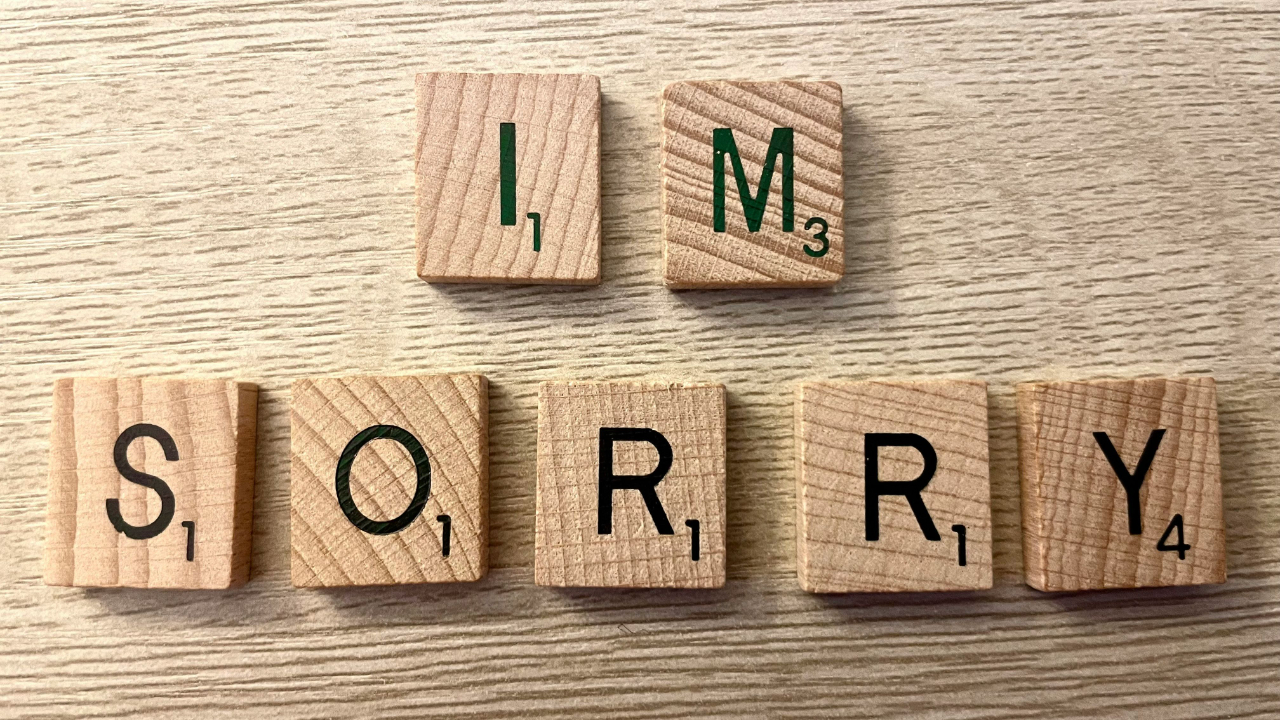
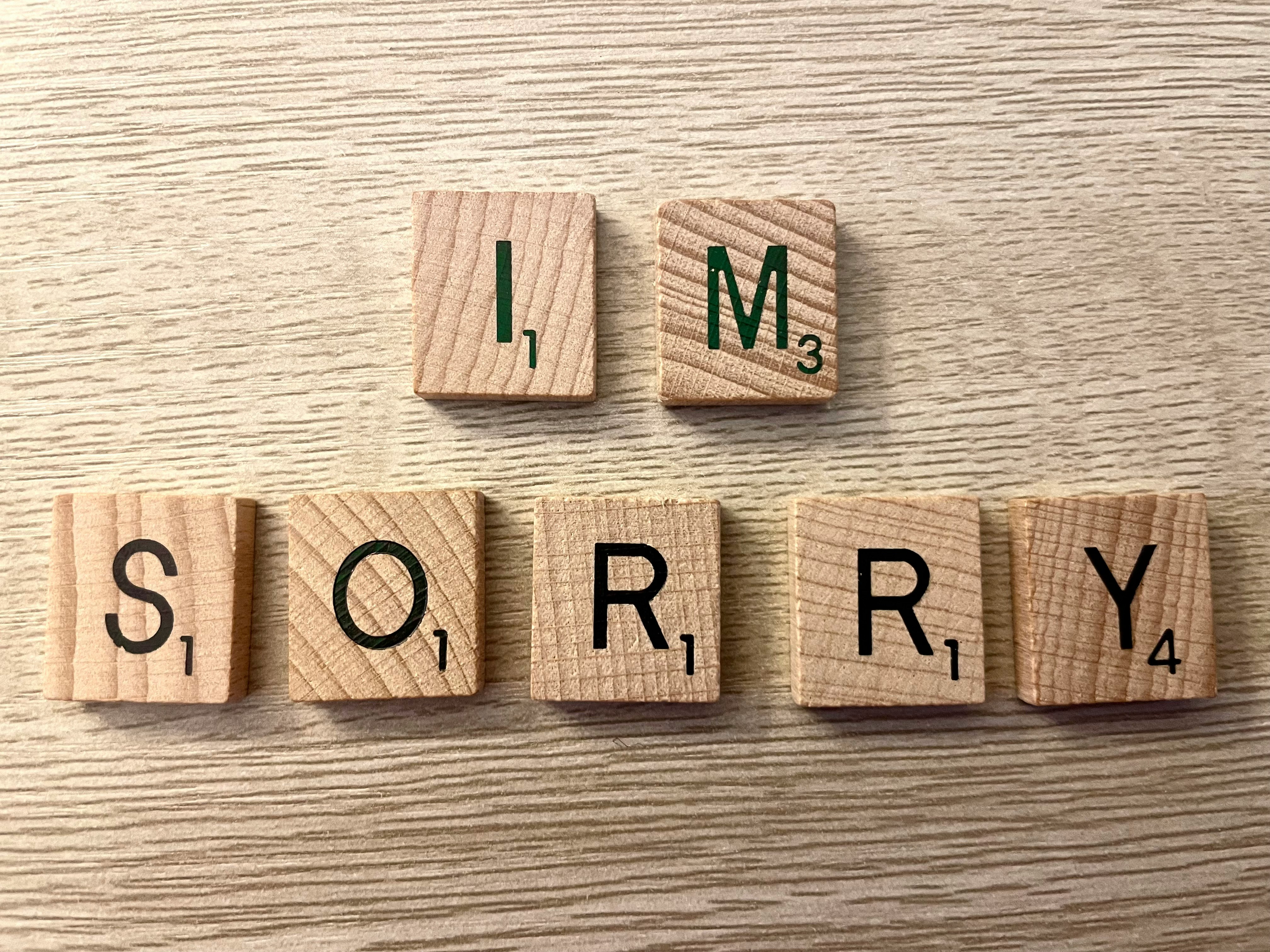
Photo by Steve DiMatteo on Unsplash
Written by Jess Kyle
Raise your hand if you know someone who apologizes for everything, to the point where it feels like they’re apologizing for their own existence?
Ah, yes, I see many hands going up.
Now - and be honest - raise your hand if you are or have ever been that person?
It’s me. Hi. I’m the apologizer - it’s me
I’m paraphrasing Taylor Swift here to come clean - I’ve been a chronic apologizer for most of my adult life, although I can’t remember exactly how or when it started. What I do remember is how I learned I was doing it.
I once had a job where I had access to an executive coach (I wasn’t actually an executive, but what am I gonna do, turn down free coaching?); let’s call him Dave. This was my first experience with coaching, and Dave was one of the most direct people I had ever met in my life. He was so blunt sometimes that it caught me off guard - his feedback was always fair, but certainly not coated in sugar.
There was one day that we were supposed to meet, but I needed to reschedule. I can’t remember why, but I sent Dave an email the morning of the session, a few hours before it was supposed to start. It went something like this:
Hi Dave,
I’m so sorry, but something urgent has come up today that I can’t get out of - would it be possible to reschedule our session? Sorry for the inconvenience.
Jess
What I was thinking when I wrote the email was that Dave was a very busy guy, and his schedule was probably booked out for weeks on end. He didn’t really have time to be moving his important meetings around to accommodate me, a client who wasn’t even an executive and who he probably didn’t see the point in coaching anyway. I thought I was being thoughtful and conscientious, on the surface. Underneath that, I think I was intimidated by Dave, and I thought apologizing for causing him the inconvenience of having to click some buttons, look at his calendar for an open slot, and type an email back to me (gasp!) would make it less likely that he’d get upset with me or like me less.
Of course, he accommodated me with no issue, and it wasn’t a big deal.
The truth hurts
When we finally did meet, Dave opened our session by telling me something characteristically direct that I probably had needed to hear for a long time. He said, “Jess, there was no reason to apologize for asking me to reschedule a meeting. You emailed me in advance, you didn’t no-show, and you weren’t causing a problem. When you apologize unnecessarily, it makes you look weak. It diminishes you. If this is something you do often, and I kind of suspect that it is, you should stop. People will respect you more if you aren’t apologizing for things that don’t require an apology.”
Hoo boy. I felt embarrassed for apologizing, and worried that I was already diminished in Dave’s eyes. Can you guess what my reflexive response was? Yeah, I wanted to apologize. I had to literally catch it in my throat before it came out of my mouth. I will never, ever forget him saying that - I’ve been chewing on it ever since, and this was back in 2022.
Ever since then, I’ve tried to be more mindful of when it’s appropriate to apologize. I’ve read several think pieces about this and tried many of the proposed techniques:
-
Replacing “I’m sorry” with “thank you”, as in, “Thanks for your flexibility” instead of “I’m sorry I asked you to reschedule”
-
Saying affirmations to myself when I had the urge to apologize, such as “Discomfort is not danger” or “I don’t need to disappear to be okay”
-
Creating other phrases to use instead of an apology, such as, “Thanks for flagging that”, “Good catch - let me fix that”, or “Let me clarify”
I’m not going to go into detail about all the ways we can stop apologizing - there are many authors and creators who have already put out great content around this, and it’s easy to find if you’re curious.
What I will say is that, for me, I needed more than just techniques. I needed to understand why I was saying sentences such as, “I’m so sorry, but can I ask you a question?”
It’s hard for me to change behaviors on a deep level until I understand where they’re coming from and what I’m trying to accomplish by doing them. What I’ve learned about myself, with the help of a great therapist, supportive friends and family, lots of alone-time to reflect, and ChatGPT, is:
-
I instinctively feel like people will like me less if I have needs and ask to have them accommodated
-
I worry that if I inconvenience someone and don’t grovel for forgiveness, they will think I’m a bad person
-
Apologizing became a reflexive response (for example, if someone bumped into me, I would say “Oh I’m sorry!” even if it clearly wasn’t my fault)
-
They weren’t empty apologies - I was carrying around chronic shame to a degree where I really was sorry for virtually everything
Talking to your inner child (no, seriously you guys)
Once I realized these things, I was able to start working through changing my mind about them. My therapist says that we all have an inner child inside of us, someone who was hurt long ago and developed coping mechanisms that no longer serve us in adulthood. She taught me how to start unraveling those protection responses by talking to that child - she calls it my “little girl”.
Am I telling you that I literally talk to myself and pretend that it’s me as a child, and that I tell that child what she needs (what I needed) to hear to feel worthy, lovable, and safe in the world? Well, yeah, I kinda am telling you that.
I won’t blow sunshine up your skirt - it felt ridiculous at first. It took some time for me to soften my ego enough to fully buy in to trying this new, uncomfortable thing. What started as going through the motions evolved into something I started to find healing. I started connecting more of my behaviors now with things that happened back then that shaped my view of the world and my place in it. And I realized something powerful - I had been using chronic apologizing as a way to protect myself from shame.
In other words, I thought that I could control outcomes and people’s perceptions of me if I apologized enough, and if I could keep people from thinking I was bad, I would feel better about myself. I also got a little dopamine high off the reassurance I’d get when I apologized, if I’m being honest. The longer I reflected on this, the more I started to see it as manipulative; I was apologizing under the guise of accountability and wanting to do right by everyone, but in practice what I was doing was using apologies as an attempt to control how people felt.
The hard truth is that we can’t control outcomes and perceptions. Not only that, but the harder we try, the more we are telling ourselves that it is, in fact, our duty to control those things, and the closer we get to a permanent address in Burnout Town. We should absolutely own our mistakes and hold ourselves and others accountable; but apologizing when we haven’t made a mistake is fake accountability.
So if you’re apologizing all the time, consider talking to your inner child to find out what wound you’re trying to heal. Even if you feel silly doing it, you might feel a subtle shift within yourself.
Stay connected with news and updates!
Join our mailing list to receive the latest news and updates from our team.
Don't worry, your information will not be shared.
We hate SPAM. We will never sell your information, for any reason.